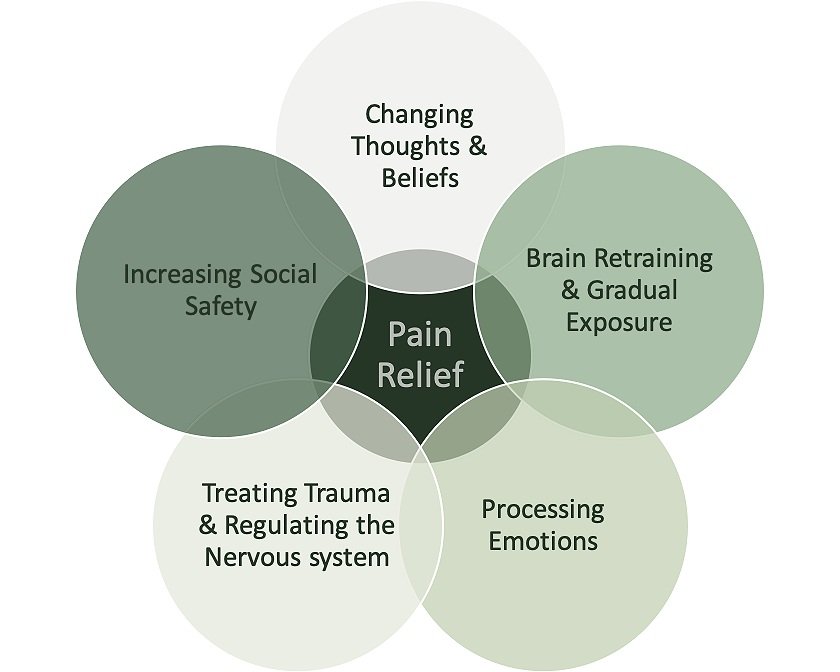
Pain Reprocessing Therapy (PRT) brings psychological technique and body-based somatic work together. The point is not to hunt for a structural culprit, but to help the nervous system unlearn a pain response that has become stuck. I use PRT inside the Functional Neuro Health approach I practise at Suffolk Park, alongside physiotherapy and kinesiology, because pain that hangs around rarely involves one system by itself. It grew out of recent neuroplastic pain research and is now studied as an evidence-based option for people whose symptoms have outlasted the original injury.
The ideas underneath it
Long-running pain is often neuroplastic. Put simply, the brain keeps producing the signal even though the tissue has settled, so nothing shows on a scan and yet the pain is entirely real. What holds it in place is a loop of sensation, thought, emotion and reaction. Work on those four things and the brain can be taught, gradually, to stop issuing danger signals it no longer needs to send.
How a session unfolds
We begin with education. Understanding how neuroplastic pain works takes some of the fear out of it. Then comes somatic tracking, where you turn attention towards the sensation itself with curiosity rather than alarm, which settles the nervous system’s sense of threat. From there we examine the beliefs and fears that have grown up around the pain and start to question them. And because unexpressed emotion so often sits beneath long-standing symptoms, we make room for that too, at whatever pace feels manageable for you.
Where it tends to be used
- Long-standing low back pain
- Neck pain
- Fibromyalgia
- Tension headaches
- Other pain syndromes that medicine cannot fully explain
What the research shows
JAMA Psychiatry published a trial of PRT in 2021, working with people who had chronic back pain. Two-thirds of those who took part reported being free of pain, or very close to it, once treatment finished. That finding is a large part of why the approach now draws so much attention.